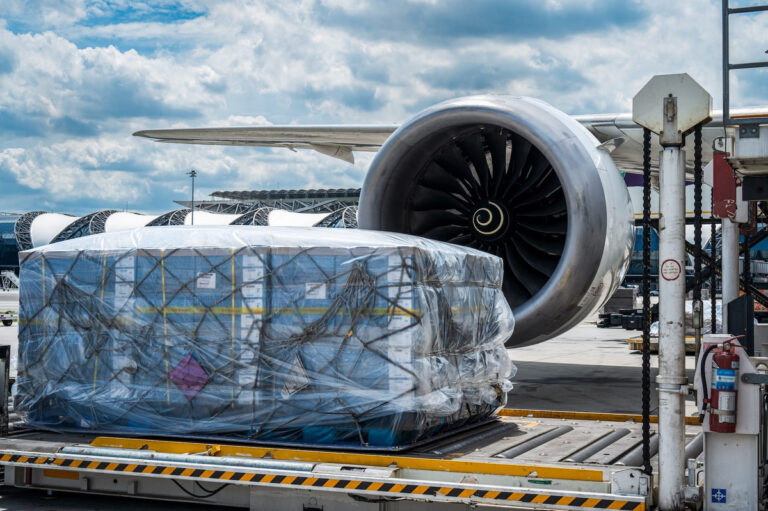
2025 has transformed the air freight industry with rising e-commerce demand, uneven air freight recovery, infrastructure friction, and increased cargo theft forcing carriers and handlers to rethink operations and security.
Proximity to sources and emerging markets in the Americas has reshaped supply chains, with increasing domestic shipments from Mexico and expanding direct shipping links between Asia and Latin America, while partnerships have emerged as critical enablers for reliability, digitalization and compliance.
The industry enters 2026 more agile, collaborative, and technology-enabled, positioned to turn volatility into opportunities despite persistent policy uncertainty, infrastructure constraints, and evolving security challenges.
Air Cargo Americas carried the sentiment that defined the event: 2025 was not just another volatile year for the air cargo industry, it was a transformative year. Distortions in capacity, pressures on infrastructure, fears of theft of goods, and the relentless rise of e-commerce have forced the sector to rethink long-standing assumptions about how it works. However, the tone in Miami was very clear: air cargo enters 2026 more adaptable, more digital, and more regionally connected than at any time since the pandemic.
Uneven recovery and structural deformities
While passenger travel has strengthened, freight operators have been reminded that belly freight has not fully recovered, and likely will not recover for some time. One respondent noted that although the ongoing exclusion of many airlines from Russian airspace is not always discussed, it remains “a silent impediment to long-range trans-Pacific operations.”
The result? This year was marked by unexpected fluctuations in capacity, as carriers serving the Asia-Americas and Asia-Latin America flows absorbed demand spikes in a short time.
A new base for e-commerce
If 2024 reintroduces volume after a slowdown, 2025 will redefine expectations. Customers have now normalized accelerated convenience, said Kees Nielsen, director of business development at Amazon Air.
The company’s on-time performance of 98.9 percent became a benchmark throughout the conference. Nielsen put the risks succinctly:
“Customer expectations are not static, they accumulate.”
For air freight, this means higher demand for later delivery times, faster lifts, online booking, and tighter first-mile and last-mile integration across the supply chain.
Infrastructure stress: the issue of confrontation
The year 2025 has exposed some cracks in the infrastructure, not in major disasters but in day-to-day operational frictions. Jared Azkoy, CEO of Alliance Ground International, drew attention to what some see as a pressure: onboarding the workforce.
“It can take six to eight weeks to flag a new employee at some airports,” Azkoy says.
For processors that are already stretched, this delay directly reduces ramp efficiency. Artificial general intelligence (AGI) has heralded significant progress in digitizing operations, but the industry remains uneven. Some airports are testing 15-30 minute truck turnover targets, while others are maintaining paperwork and personalized service.
While Latin America has made some strides, internal transportation costs and outdated customs procedures continue to increase frictions.
Reconnecting America’s Supply Chains
The year 2025 will mark a critical shift in how the Americas think about supply chains. Brazil, Chile and Colombia have continued to evolve from “export-centric” economies into major e-commerce consumer markets, changing flow patterns and encouraging new wide-body shipping services.
Mexico remained the center of gravity, but experts stressed that 2025 was the year of “near supply” and not the year of large-scale near supply. Domestic producers increased US shipments, but foreign direct investment inflows were dominated by reinvestments rather than new factory projects.
Speakers highlighted new momentum in the Dominican Republic, Costa Rica and Guatemala, which are becoming part of the expanded production base in North America. More direct shipping links between Asia and Latin America, including 777 and 747 routes to São Paulo, Santiago and Bogotá, have helped diversify sourcing options and reduce reliance on transshipment in the United States.
Safety, security and theft concerns
Merchandise theft has re-emerged as a major concern in 2025, especially in Mexico, Brazil, and parts of the United States. In response, carriers and handlers are expanding camera-based AI safety monitoring, strengthening high-value warehousing facilities, and relying more heavily on bonded trucking networks.
It’s not just high-value electronics or medications that are a concern. Speakers noted that even public goods could be a target, with organized groups using increasingly sophisticated methods. In May, for example, bandits posing as police officers stopped a truck carrying audio equipment for the cumbia band Los Angeles Azules on the Mexico-Puebla highway, seized the weapons and drove off with the cargo — a notable example of fake checkpoint schemes that are becoming more common on major roads. Such incidents exploit gaps in visibility during air-to-ground deliveries and highway crossings.
Security has been repeatedly identified as one of the industry’s top five concerns for 2026, with operators calling for greater collaboration between carriers, processors and law enforcement.
Partnerships: New Infrastructure
Partnerships are the new infrastructure, and the next decade will reward companies that align early with strategic partners. This was evident in air carriers deepening their relationships with handlers, technology companies and freight forwarders, and in the growing recognition that no actor can meet demand, digitalise, comply with changing rules, and maintain service reliability alone.
2026: The Year of the Readiness Bonus
Looking ahead, executives agreed that 2026 will naturally bring election-year policy risks, uncertainty over the US-Mexico-Canada Agreement review, shifting demand in Asia and Latin America, continued reliance on shipping, and deeper customs and compliance scrutiny across the region.
However, the tone was optimistic. The industry enters 2026 more agile, collaborative and technologically capable than at any time before the pandemic.
If 2025 was the year the industry learned how to navigate through disruption, 2026 may be the year it turns volatility into opportunities.
About the Author